Groth & Co on navigating AI’s legal risks
29 October 2026
Every business leader has heard the pitch by now. Generative AI will save time, cut costs, and transform workflows. And it probably will. But behind the promise of efficiency lies a great set of legal questions that many companies are not yet equipped to answer – and the consequences of getting them wrong are real. Regulation is tightening across Europe, creative and commercial production increasingly relies on AI-generated content, and intellectual property now sits at the heart of how organisations manage risks and sustain trust.
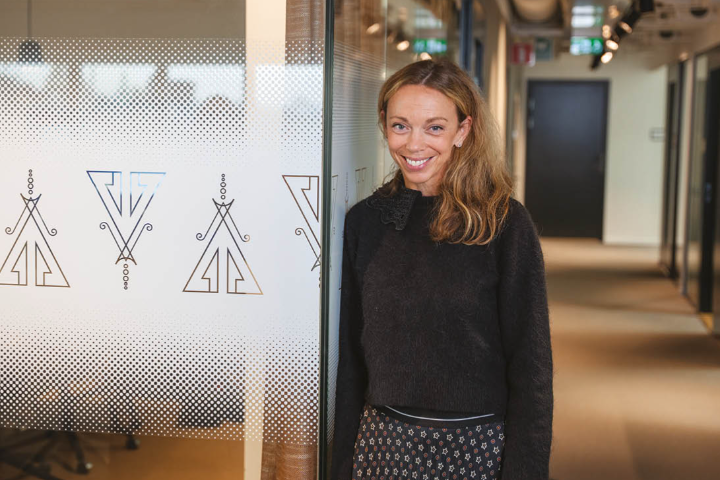
The EU AI Act – the world’s first comprehensive attempt to regulate artificial intelligence – makes this unavoidable. We spoke to Karin Crafoord, Partner and Head of the Legal and Trademark Department at Groth & Co, who gives a nuanced description of our new co-workers in the office: “AI is not simply a technology matter, but increasingly a question of rights, governance, and business risk.”
The IP landscape that shifted
Generative AI raises intellectual property questions at almost every stage of its use. What material can legally be used as input or training data? Does the output infringe third-party rights? Who owns the end result, and can it even be protected?
Karin is direct about the scope: “The generative AI tools that we are all working with today, they are really related to all intellectual property matters. For instance, trademarks and copyright.” And the exposure could begin before a single prompt is typed. “Many generative AI models are trained on copyrighted material, which could in itself constitute copyright infringement, depending on how the material was obtained and used,” she says.
A case that tested the limits
A recent Swedish advertising campaign was a good example of how quickly this can unravel. Long story short: an AI-generated image bore a striking resemblance to a photographer’s existing work. Karin, who commented on the case in Swedish media, reflects on what made it so legally tangled:
“Technology develops so quickly and the legal sources don’t. So that’s a bit tricky. Besides, it’s not only the producer of the AI tool who has responsibility, but also the person prompting and then eventually using the output. Even though you didn’t have intent to infringe someone’s work, you could still be liable.”
The copyright legislation used to assess infringement has not changed, it was simply written for a world where humans did the creating, not machines. The basic question, as Karin frames it, remains the same: “What has been copied, from what, and is what has been taken part of the protected expression?” The technology is new. The legal test is not.
Who is responsible – the brand, the agency, or the tech provider?
Potentially all of them. “Using AI does not shift responsibility to the technology provider. Each party remains responsible for its own role in creating and using the content,” Karin explains. And the implications run further than most businesses realise: “Contracts can allocate risk and responsibility between the parties, but they cannot override third-party IP rights.” Signing a contract with an agency or a tool provider does not make an infringement disappear.
What the law requires from you
The EU AI Act introduces requirements around transparency, governance, and documentation. The precise obligations depend on the AI system and the role of the business involved. “AI compliance increasingly needs to be incorporated into ordinary corporate compliance and content-approval processes rather than treated as a stand-alone technology issue,” says Karin.
For UK-based businesses, the landscape differs but the responsibility does not. As of summer 2026, the UK has no direct equivalent to the EU AI Act, instead relying on existing regulators and five cross-sector principles – safety, transparency, fairness, accountability, and contestability. In March 2026, the UK Government also proposed removing copyright protection for purely computer-generated works, while maintaining it for AI-assisted works where sufficient human creative input is involved. Businesses operating across both markets should not assume a single AI policy will satisfy all legal requirements.
Karin’s advice is practical: “Treat AI as a production tool, not a legal shield. Verify that you have the right to use your inputs, review your outputs and keep a clear record of the process.”
Why expertise still matters
So, will AI eventually make specialist legal advice redundant? Karin is sceptical – and emphasises what can lie behind a polished appearance:
“AI output could be unreliable in so many aspects, yet appear remarkably convincing and authoritative. But when you scratch beneath the surface and start checking the sources, you may find yourself asking: ‘Where’s the support for this?’ And sometimes, it simply isn’t there.”
This gap is where the real risk lives. The firm has observed a telling pattern: as clients use AI more confidently, they send through more documentation – longer summaries, more elaborate analyses – and “it takes quite a long time to review all of this material.” Volume goes up. Efficiency, counterintuitively, can go down.
Groth & Co has been creating and optimising intellectual property since 1869, making it Scandinavia’s oldest firm in the industry. Operating as a specialist boutique across trademarks, copyright, patents, and designs, the firm is equipped to view a client’s AI-related exposure in the round.
To Karin, a key issue is “not only how lawyers themselves use AI, but also how AI is changing the interaction between clients and their legal advisers. Used well, it can be a very useful tool, but it still requires professional judgement, source verification, and an understanding of the wider legal and commercial context.”
Decisions made now will define what comes next
The legal landscape around AI is moving and courts in different jurisdictions are reaching different conclusions. Regulatory frameworks are evolving. What will not change is the expectation that businesses understand and can document how their content has been created.
The organisations getting this right are not waiting for 100% certainty. They are asking, right now, who inside their business is thinking about it – and making sure these people have the right support around them.
Three AI mistakes businesses are making, according to Groth & Co:
1. Assuming AI-generated content is automatically safe to use.
AI-generated images, music and text may reproduce protected expression or incorporated third-party copyright, trademarks, or designs. Their commercial use may therefore infringe third-party rights, depending on the circumstances. AI tools do not provide reliable intellectual property clearance, so outputs must be reviewed before use.
2. Not thinking carefully about what goes into the tool.
What you feed an AI tool matters as much as what comes out. Companies should consider whether they have the right to upload reference material in the first place. Skipping reading the terms and conditions when signing up, that small box so often ticked quickly, can carry real commercial and legal consequences down the line.
3. Using AI output without sufficient human review
Speed is the appeal of AI. It is also the risk. AI-generated material can be inaccurate, vague, or misleading, and important legal or commercial nuances may simply be missing. Without any controls at all, using the output from the AI tool is itself an exposure. Human oversight and approval processes are not optional extras.