When Hollywood wants a game, they call Malmö
03 September 2026
When people talk about Sweden's global reach, they tend to reach for the obvious cultural touchstones. But there is another faster-moving story that has been unfolding for three decades – one that has less to do with the brands of the past and more to do with the digital worlds we now spend hours inside every day. Sweden has become one of the most formidable forces in the global games industry, and the implications stretch well beyond entertainment.
Sweden has always been a country that punches above its weight creatively. What has changed is the medium. Swedish studios have become the force behind some of the most recognisable games on the planet – Minecraft, Candy Crush, Battlefield, Helldivers II, Arc Raiders, The Division – titles that have become genuine cultural landmarks, recognised far beyond the world of gaming and consumed by hundreds of millions of people every day.
Thomas Bressler, Business Developer & Investment Advisor at our Member Invest in Skåne – the organisation that brought Swedish studios and investors together in London this April – says: "Maybe the titles speak for themselves? Even though you might not play games, you know about the titles."
This is not an accident. It is the result of a culture that was, for structural reasons, forced to think internationally from the start. Swedish companies now account for a remarkable share of revenue on Steam, the world's largest games platform. Two out of the five fastest-growing tech companies in Sweden are games studios, and nine qualify for Deloitte's list of top 50 fastest-growing tech companies.
Martin Walfisz, a veteran of Sweden's games industry, frames it like this: “Sweden is one of the world's most influential game development ecosystems. We consistently create globally successful games, technology, and companies despite having a tiny domestic market. Swedish studios have had to think internationally from the beginning, creating companies with strong technical foundations and a willingness to adapt as the industry evolves.”
That international orientation is baked into the DNA of Swedish studios. It is not a strategy they adopted – it was a necessity that became a competitive advantage.
The Skåne effect
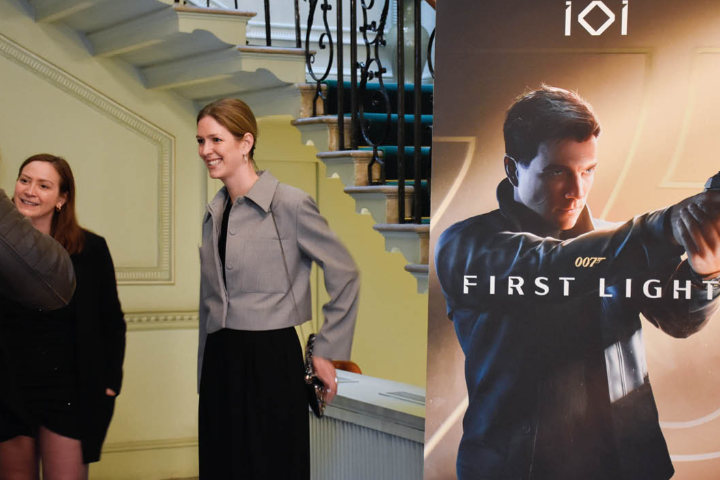
If Sweden is the engine, then Skåne is the turbocharger. The southernmost region of Sweden has become an exceptionally talent-dense hub for games development, home to studios that have built experiences set in the Star Wars universe, the world of Avatar, and most recently the James Bond game 007 First Light – developed in Malmö and released earlier this year. Guests at the April reception at the Swedish Ambassador's Residence in London were among the first to see the trailer.
There is a reason the Bond franchise came to Malmö. IO Interactive’s Malmö-based team – with its legacy from the Hitman series – is a natural steward for an IP like James Bond. That creative heritage sits within a wider ecosystem: Skåne's R&D investment runs at 3.4% compared to a Swedish national average of around 2.2%, and the concentration of experienced, senior talent in the region is difficult to replicate elsewhere. They say that when Hollywood – or London – wants a game, they go to Malmö.
It was this ecosystem that formed the backdrop for an inviteonly reception held at the Swedish Ambassador's Residence in London in April, organised by Invest in Skåne, the Swedish Chamber of Commerce for the UK, and the Swedish Embassy to the United Kingdom. The event, timed to coincide with the London Games Festival, brought together Swedish studios, games investors, and industry figures to explore the SwedishBritish opportunity – one defined less by formal trade frameworks and more by shared creative ambition.
“The UK brings world-leading entertainment IPs and capital, Sweden brings an incredible concentration of engineering talent in games. More and more, you see IP moving both ways between games and film – from Sonic the Hedgehog to Hazelight’s It Takes Two, now being made into a film. At the same time, British-owned IPs like Bond are developed in Swedish studios. Young people often meet these worlds first through games, and that is where a lot of the future will be,” says Thomas.
What makes Swedish studios different
Beyond the headline titles, something more structural is at work. Martin points to Nordic work culture as a genuine differentiator, and one that is easy to underestimate: "Nordic work culture has played a critical role. Great games emerge through constant iteration between different disciplines, and Swedish workplaces are often good at creating collaborative environments without strict hierarchies – the 'square engineers' genuinely collaborating with 'round artists' to create magical experiences."
He is quick to acknowledge that this approach can look inefficient from the outside. But in creative industries, it consistently produces stronger teams, faster learning, and more resilient organisations.
The conversation at the Residence also surfaced something important about investor appetite. As Thomas notes at the event: "Investing in games requires a different mindset than for investing in tech – you're not funding the solution to a problem, you're funding the building of worlds. Investor appetite will likely grow when the tech used for games is applied in other industries as well."
Peter Lübeck, CEO at Game Habitat, sees the next wave of growth coming from new kinds of teams and founders: “The greatest opportunities lie in enabling the hundreds of new and emerging teams breaking new ground. Future growth will likely come from many smaller teams, using new technologies to build smarter and faster – and from founders who break norms, come from diverse backgrounds and bring fresh perspectives on what makes a great game.”
This is a critical point. The tools that games studios use every day – real-time rendering, AI-driven systems, simulation, game engine platforms like Unreal Engine and Unity – are increasingly being adopted and applied in sectors such as automotive, architecture, film production, and healthcare, alongside their continued use in games. The studios building these capabilities today are not just games companies. They are technology companies with games as their first market.
The next chapter: smaller, faster, bolder
The direction of travel within Sweden's games ecosystem is shifting. For years, the conversation was defined by scale – bigger studios, larger valuations, high-profile acquisitions. That narrative has not disappeared, but it is no longer the only one.
Martin describes a new model taking hold: "The biggest opportunity for Swedish game companies over the next few years is probably our adaptability. What excites me most is the rise of what I call 'game bands': small, highly creative teams built around shared taste, fast iteration, and strong creative chemistry."
Studios like Landfall and indie publisher Raw Fury are early proof of concept – small organisations that move quickly, experiment boldly, and build distinct identities without needing the infrastructure of a major publisher behind them.
What games can teach organisations about creative leadership
There is a broader lesson here that extends well beyond the games industry. The characteristics that have made Swedish studios globally competitive – flat hierarchies, iterative working, cross-disciplinary collaboration, and a willingness to operate in conditions of genuine uncertainty – are precisely the qualities that leaders in any creative or knowledge-based sector are trying to cultivate.
Martin puts it well: "Long-term success is not just about scaling organisations, but about building environments where talented people can continue to learn, collaborate, and create meaningful experiences."
The Swedish-British games relationship, still developing and full of potential, is a practical case study in what that looks like in action. Whether you work in games, investment, technology, or any sector navigating rapid change, the Swedish experience offers something concrete: proof that creative culture, built carefully and protected over time, is itself a competitive asset.